What's wrong with my plant? Start with the plant.
A plain-English reference library of houseplant problems, organized by species — because a yellow leaf means one thing on a monstera and something else entirely on a snake plant. Each guide gives you what you're seeing, the likely causes in order, the checks that tell them apart, the fix step by step, and an honest line on when it's time to let the plant go.
- 7species covered in this first batch
- 5steps in every diagnosis
- #1suspect in most cases: water
- 0products sold, ever
Find your plant
Type the plant, or what it's doing — try “yellow leaves”, “mushy”, “drooping”, “brown tips”, “leggy”, or “not blooming”.
The first batch
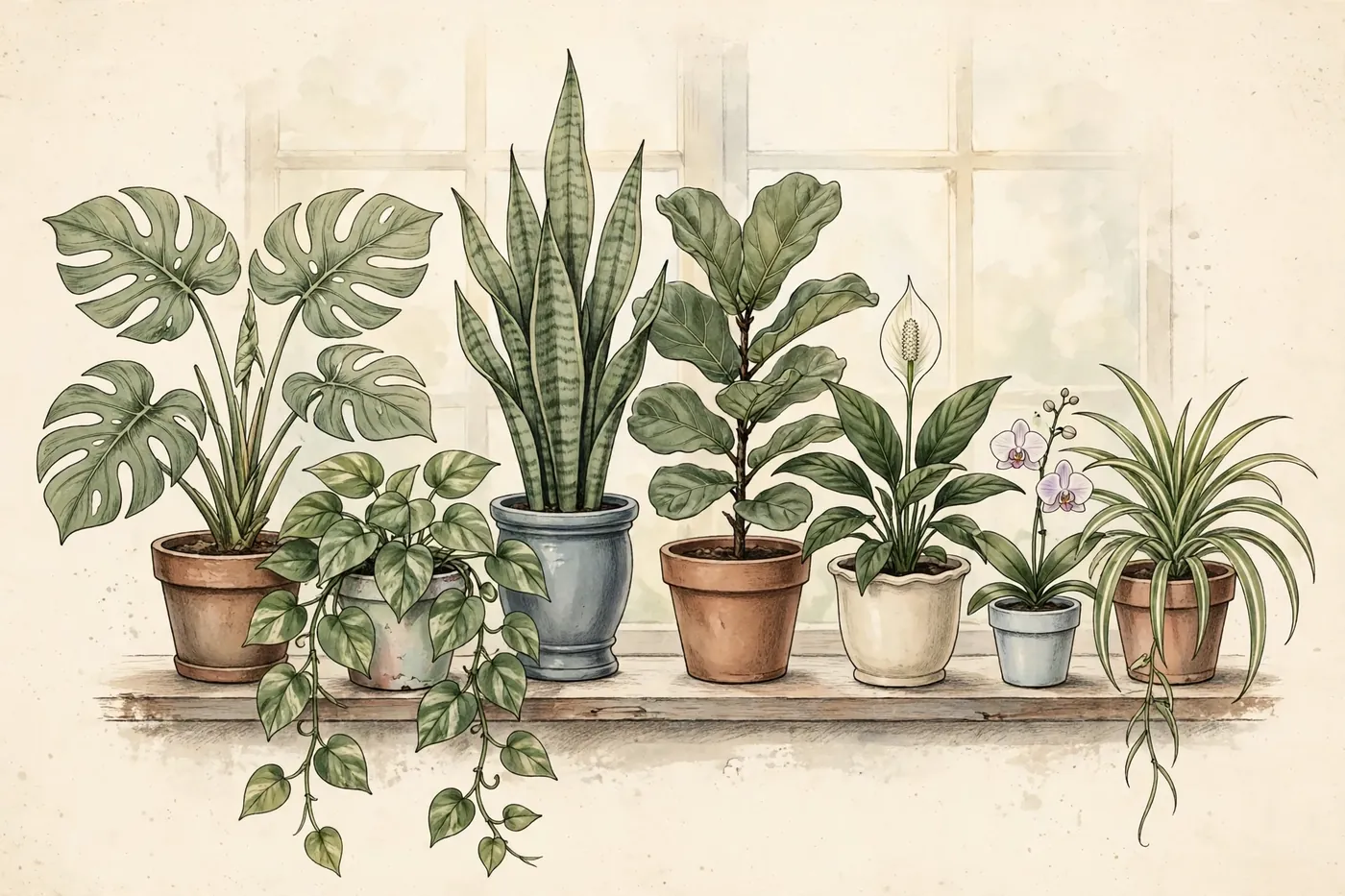
Seven species, each with the problem their owners search for most.
How every diagnosis is built
One formula, followed the same way on every page.
What you're seeing
The symptoms, described the way they actually look on the plant in front of you — not in textbook language.
Causes, in order
The likely culprits ranked most to least likely for this species, so you check the probable ones first.
How to confirm
Simple hands-on checks — soil moisture, root colour, a gentle tug — that separate one cause from another.
The fix, step by step
The rescue, in the order you'd actually do it, with nothing stronger than household tools.
When to stop
The honest line: the signs a plant is past saving, when to toss it, and what (if anything) can be propagated from what's left.
The clinic's standing rules
- Water is the first suspect. Most houseplants don't die of thirst — they drown, slowly, in wet soil. Check the roots before you reach for fertilizer.
- Diagnose before you treat. The same yellow leaf can mean too much water, too little light, or nothing wrong at all. The checks on each page take two minutes and save most plants.
- Change one thing at a time. Repot it, move it, and feed it all in one weekend and you'll never know what helped — or what hurt.